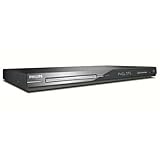
OPPO OPDV971H Digital HD-Ready Up-Converting DVD Player Review

OPPO OPDV971H Digital HD-Ready Up-Converting DVD Player
Average Reviews:

(More customer reviews)
I just got this player thru Amazon, and ran two region1 DVD disks: LOTR Return of the King Platinum and Dying Young. The short review: The wife is so impressed with the Oppo's picture quality (that's probably the most important consideration when buying anything like this). I was expecting the quality, since I was able to demo a Samsung earlier that could do DCDI/Faroudja/upconvertion. ADDED: I also tried Star Wars DVD. WOW!! The picture quality really blew me away. I can see details in the movie I have never seen before on a TV.
Our Oppo/HT setup: Panasonic AE700 widescreen lcd projector hdmi, ht=61" x wd=108" diy "blackout" screen (viewing distance=3.5meters), Yamaha RXV2095 receiver, Pioneer DV515 (old non-progressive dvd player via 12meter sVideo, 1.5meter fiber optic audio), Oppo DV971H (via dvi-to-hdmi adapter, 5meter hdmi cable, 3.7meter 75ohm component video cable, 10meter 75ohm coax audio), Speakers: Wharfedale Diamond 8.4 L/R/C and Bose AM10 L/R/C/Surr, Wiring AWG12. Home Theater PC setup (6meter VGA output, 1.5 meter fiber optic audio, Asus Pentium 4-2.67GHz notebook, ATI Radeon 9000-64MB, 512MB, 40GB HDD, ZoomPlayer, FFDShow, PowerStrip, WinDVD6, PowerDVD6). (1meter = 3.28ft)
I have observed a significant video improvement over our old pioneer DVD player. I also tried a 1970's movie (I won't mention the title) that was so poorly transferred to DVD (region3), and I noticed a significant improvement in the video playback over the old player. The noise artifacts were minimized, and the sharpness had a significant improvement. I guess that was the DCDI/Faroudja chip doing its work.
I've tried the 480p,720p,1080i upconvertion using the "dvi" button on the remote and although I couldn't really notice the difference in quality between the three modes even on such a large screen, the lcd projector saw the difference and reported the corresponding "input source signal". I may have to observe some more and change the projector's picture mode, we usually leave it at "Cinema1 mode".
ADDED: okay, I've now looked A LOT closer using Crouching Tiger Hidden Dragon region3 DVD. Basically, as I move up the DVI resolution from 480p to 720p to 1080i, I did noticed that less and less horizontal lines were becoming visible (a good thing).
BUT, since our projector uses hdmi, the picture does suffer from hdmi cropping issues (varies with the resolution being used). Using component/analog gives the largest picture that can occupy the screen (unfortunately there is no upconversion using component, only the Oppo's DVI output has the upconversion). At the projector side: Using hdmi input, the picture appears cropped (black bars at the left and right, sometimes at the top and bottom, sometimes a combination of both). I also cannot change aspect ratio using hdmi, while you can using component/analog inputs of the projector.
ADDED: The Oppo I have can play DVD-Audio, something not stated in the manuals or the unit's array of logos. The DVD-Audio sampler disc I used came from Creative Lab's Audigy 2 for the PC.
ADDED: I also compaired the Oppo's component output vs. the dvi-to-hdmi output, basically, there's a big difference in the picture quality, you should connect using the dvi output if possible.
I also noticed that the subtitles on the movies are much easier to read now when compaired to the old dvd player, but on one brief moment the subtitles on Dying Young were garbled -that's never happened before on the Pioneer.
ADDED: Okay, this has now happened to a bunch of other DVDs, sometimes it garbles one single line of subtitle per entire single dvd I watched. That is still an acceptable problem to me.
I also heard no apparent difference in audio quality between the Oppo and the old Pioneer despite the length of the coax. Naturally I set all audio sound effects to off when compairing audio CDs.
I also compaired the Oppo to our HTPC. Basically, the HTPC could output better video than the old Pioneer, but when compairing with Oppo, I prefer the Oppo. I don't want the hassle the HTPC is giving me. I saw no significant video quality difference between the HTPC and the Oppo. So my take on this is if you're happy with your HTPC, stick to it. If you want convenience then Oppo is something to look at. If you can't demo an Oppo, try looking at anything with DCDI/Faroudja.
Bottom line: I am happy with the purchase. Good value for the money. It's region free and can upconvert, and that's what's important to me. I chose Oppo vs. Momitsu V880 because I prefer Faroudja over Sigma Designs. BUT, BUT, here are my Oppo gripes....
1. I don't like the remote's key layout, it also seems flimsy, it could use a backlight.
2. I don't like the el-cheapo plastic disc tray. It looks like it will break easily. It's weird having to insert a disc if the tray doesn't comeout 100% all the way. I just hope this is the design, not a defect.
3. I don't like the bright blue light which is distracting in a completely dark home theater room.
4. The player's buttons are a little hard to press, well, maybe because it's still new. As with other players, not all remote functions can be found on the unit itself. So take care of the remote.
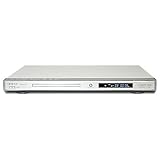
5. I wish the unit was color black instead of silver.
6. I don't like the OSD font, could use a better readable font.
7. The setup menu could be more descriptive, the manual helps but not enough...
8. I wish it was HDMI rather than DVI, but the adapter solved that issue.
ADDED: 9. Subtitle display is sometimes garbled (sometimes happens once on a single line per DVD watched).
ADDED 05/28: Okay, after 3 months and almost 200 hrs of use, I am still happy with this purchase. However, not all DVD titles appeared fantastic thru the DVI upconversion output (hdmi input on our projector), such as Top Gun r1. I had to watch it thru the component output. It appeared too visually noisy via DVI.

Eric Gutierrez
Manila, Philippines

Click Here to see more reviews about: OPPO OPDV971H Digital HD-Ready Up-Converting DVD Player

Improve the picture quality of DVD movies shown on your high-definition television with the versatile OPPO Digital OPDV971H DVD player, which provides 480p/540p/576p/720p/1080i resolutions and can upconvert 480i video from DVDs to the high definition 720p/1080i formats. Featuring a slim and elegant design, it featurs a sleek, silver design that will fit in nicely the rest of your home theater's components. In addition to standard DVD move and CD audio discs, it's also compatible with DVD-R/RW, DVD+R/RW, (S)VCD, HDCD, and CD-R/RW discs as well as WMA and JPEG digital content. It also plays DivX 5, DivX 4, DivX 3, and DivX VOD video content (in compliance with DivX Certified technical requirements).
The OPDV971H features Faroudja's Emmy award-winning DCDi deinterlacing and scaling technology to up-convert standard video in DVDs to HD resolutions. DCDi (Directional Correlational Deinterlacing) technology eliminates the jagginess that conventional upconverters introduced to diagonal edges in video. FaroudjaÕs unique DCDi algorithm identifies all the moving edges in a scene and adjusts the angle of interpolation at each pixel so that the interpolation always follows the edge instead of crossing it, eliminating staircasing or jagged edge artifacts.
Other features include a 108MHz/12bit video D/A converter, super error correction with twin laser and intelligent laser wavelength control, NTSC/PAL output (from both NTSC and PAL formatted discs), multi-angled view capability, virtual surround sound, and built-in Dolby Digital and DTS decoders. Future upgrades to the firmware can be updated to the player via a CD-ROM disc. It offers the following connection options:
DVI Out: 1 (480p, 576p, 540p, 720p, 1080i resolutions)
S-Video Out: 1
Composite AV Out: 1
Component Out
Subwoofer Out: 1
Optical digital audio Out: 1
Coaxial digital audio Out: 1

Tech Talk DivX is a video codec (a piece of software encoding and decoding video) based on the MPEG-4 compression format, that blends good quality video with a low bitrate. This translates to a smaller file size (around 15 percent of a standard DVD's video file), making it easier to transfer to portable devices as well as quicker to create (encode).
HDCD (High Definition Compatible Digital) is a disc encoding format for audio CDs and DVDs. It can encode 20 bits of audio information into a conventional CD 16-bit channel, yielding a greater dynamic range and a more true-to-life sound when decoded. HDCD-equipped players will improve audio quality for even traditionally recorded CDs and DVDs. Conversely, because of the recording process, HDCD-encoded media will also sound better than traditionally CDs and DVDs on players that don't have the HDCD chip.
DVI (Digital Video Interface) provides an uncompressed transfer of high definition video from a digital video source to a digital display device. HDCP (High Bandwidth Digital Content Protection) ensures copy protection of the content. The DVI output is also essential if you want to watch copyrighted DVDÕs at a higher, upconverted resolution (other video connections do not provide upconversion).
What's in the Box DVD player, remote control (with batteries), video cable, RCA L/R audio cable, printed operating instructions

Buy Now

Click here for more information about OPPO OPDV971H Digital HD-Ready Up-Converting DVD Player

Read More...

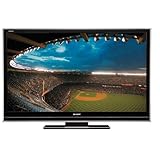
Sharp Aquos LC52D85U 52-Inch 1080p 120Hz LCD HDTV Review

Sharp Aquos LC52D85U 52-Inch 1080p 120Hz LCD HDTV
Average Reviews:

(More customer reviews)
My new Sharp Aquos LC52D85U 52-Inch 1080p 120Hz LCD HDTV arrived in 4 days, and 3 days early from the Video & Audio Center, in perfect shape. The courier helped me unpack, set up and place this monster on its stand. Great service does not get any better than that. I first plugged in the HDMI connection to my RR HD-DVR and then the power plug, sat down & and struggled to find the HDMI connection I had used in the onscreen menu - there were so many inputs it was trial and error(didn't read the manual, no time!). Finally I landed on input 4 which was the live HDMI connection - the channel was set to a full HD channel and had a Fleetwood Mac concert recorded in 2004 playing in full glorious 1080i. I could see every strand of fly away hair and split ends on Stevie Nicks. Frankly I almost soiled myself because I was not expecting THAT degree of picture quality. I am still getting goosebumps from this beauty. This HDTV is just magnificent. The picture is bright, crisp and free of any banding issues. I can say without a doubt this TV will please even the most finicky of consumers. Tech types can tweak away at the hue and saturation controls to their hearts contect, color temperature, active contrast, fine motion are all customizable. The set even makes 480i HBO broadcasts look almost like HD quality.
I have been reading online reviews and customer experiences for over 3 months on all brands of HDTV's prior to pulling the trigger, and I can assure you that you will not be disappointed with this HDTV. I am reluctant to touch the fine tuning picture controls for fear of messing with the already perfect, gorgeous picture right out of the box! One of the reasons I ruled out other brands such as Samsung was the lack of a matte screen to combat reflective glare, as my living room has two banks of floor to ceiling windows & also with cathedral ceilings, facing south. Thus I was concerned with buying just an expensive mirror. It is so sunny in my viewing area an old CRT set was unwatchable during the brightest morning hours - not so this Sharp HDTV. The anti-reflective surface completely eliminates any bothersome reflections. The viewing angle is just about as advertised, I can stand almost 75 degrees to the side and still can view the screen. Just an amazing set. I liked the way the TV will indicate the screen resolution upon changing to a new channel, I find this to be a nice touch. I really liked that the user can alter the range of the OPC and power saving feature so as to limit the degree that the set will automatically reduce brightness in a dark room.
An aggressive price, & free shipping just clinched it for me; I had already decided on the Sharp. This a just a great HDTV, if you are considering this set at all, just go for it.


Click Here to see more reviews about: Sharp Aquos LC52D85U 52-Inch 1080p 120Hz LCD HDTV

The AQUOS LC52D85U sets a new standard for large-screen flat panel TVs. With Full HD 1080p resolution and an elegant new design, it produces a breathtaking picture quality that is second to none. The LC52D85U utilizes Sharp's proprietary Advanced Super View/Black TFT Panel with Spectral Contrast Engine, providing high Dynamic Contrast Ratio, 4ms response time and wide viewing angles (176H x 176V). In addition, The LC52D85U includes 120HZ Fine Motion Enhanced for the ultimate in fast-motion image processing. The LC52D85U has built-in ATSC / QAM / NTSC tuner and includes 5 HDMI inputs, compatible with 1080p signals, and 2 HD 1080p component video inputs. The LC52D85U features a sleek piano black cabinet with subtle recessed bottom-mounted speakers. The included table stand easily removes for wall mounting applications.

Buy Now

Click here for more information about Sharp Aquos LC52D85U 52-Inch 1080p 120Hz LCD HDTV

Read More...

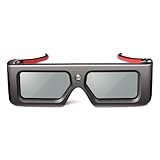
ViewSonic PGD-150 Active Stereographic 3D Shutter Glasses for ViewSonic DLP Link 120 Hz/3D Ready Projectors, Black Review

ViewSonic PGD-150 Active Stereographic 3D Shutter Glasses for ViewSonic DLP Link 120 Hz/3D Ready Projectors, Black
Average Reviews:

(More customer reviews)
I intended to simply review the Viewsonic 3D DLP Link glasses, but I thought I would also share some things I needed to do to get my system setup to display 3D material.
I have a 2008 model Mitsubishi WD 65735 DLP television. In order to watch 3D programming there are a number of options that one can choose, each one of which requires a different type of setup. The "3D ready" TVs that Mitsubishi sold in 2008 (and a couple of other years) require the 3D signal to be formatted in what is called "checkerboard" format. This is one of three or four different methods in which 3D video might be formatted. I wanted to be able to view 3D video that is provided both by my cable provider (Brighthouse) as well as 3D video that is gradually becoming available on Blu Ray disks. Unfortunately, this required two different approaches to make the 3D source material compatible with the checkerboard format required by my Mitsubishi television.
1. The easy part - 3D video via Blu Ray disks: In order to view Blu Ray disks on my model Mitsubishi DLP television, I needed a 3D capable Blu Ray player that would output a 3D signal in the checkerboard format required my Mitsubishi. Panasonic makes three models of players that specifically support this format (the BDT 350, BDT 300 and the BDT 100 and its private model variations such as the BDT 105 and BDT 107. I chose the BDT 100 because it was the least expensive and still met all my connectivity needs. To set up the components to watch a 3D video, all I needed to do was to connect the player via HDMI, set the Mitsubishi to 3D mode in the setup menu, and set the Panasonic player to output 3D in checkerboard format via its setup menu. If you are using the Viewsonic 3D glasses, you can set the polarity in either the normal or the reverse mode in the television 3D setup menu because these glasses have the ability to switch polarity by simply pressing the power button once they are turned on and viewing a 3D image. You can tell which mode is correct simply by looking at the picture. If the polarity is not set correctly, the 3D image will look flat and somewhat blurry. Simply press the power button on the glasses a couple of times and to see what looks best. It will be pretty obvious
(NOTE: I discovered that it is critical to set the Mitsubishi in 3D mode BEFORE you choose the HDMI input through which the BluRay player is connected to the television or before you turn the player on. This is because the Blu Ray player communicates with the TV to determine whether or not it (the TV) is capable of playing 3D videos. If this communication occurs before you set the TV to 3D mode, the player will think that the TV is not capable of displaying a 3D image and will only play the video in 2D format. If this happens, turn the player off, set the TV to 3D mode, and then turn the player back on so the "handshaking" between the two occurs again. (You will not want to set the TV to 3D mode and keep it there, because when you watch 2D source material with the TV in 3D mode, the picture will look washed out and less bright.)
Once this is all done, start the video, power on the glasses, check the polarity and you will be enjoying great 3D video. There is no external emitter required with the Viewsonic glasses as the glasses automatically synch up with the TV using a burst of light that the TV produces This is what the "DLP Link" technology does and why these glasses will only work with at DLP television.
2. The harder part -- watching 3D video via cable: Although my cable provider does have a limited selection of 3D video available, the format it provides the signal in is not the checkerboard format required by the Mitsubishi television. To view this content, I had to buy the $99 Mitsubishi 3DA-1 adaptor. This adaptor converts a variety of other types of 3D signals to the checkerboard format required by the television. I did not buy the Mitsubishi starter pack (which also contains 2 pairs of glasses) because the starter pack with two pairs of glasses cost more than buying adaptor alone and three pairs of the Viewsonic glasses. Also, the starter pack does not use the DLP Link technology for the glasses. It uses "active 3d" glasses which require a separate emitter (which is included in the starter pack). While there are pros and cons to the different approaches, I chose the DLP Link approach because it is not possible to disable the DLP Link burst of light on the Mitsubishi television. This burst of light is not visible when using DLP Link glasses, but it has been reported that when using active 3D glasses (which do not require this burst to operate), the resulting picture looks more washed out because of it.
The adaptor is not hard to hook up, but it is certainly more complicated to get working correctly than is the Blu Ray player. This is because you have to set the adaptor for the particular format that your source material is being provided in (which can vary depending on the service provider) in order for it to be properly decoded into the checkerboard format that the TV requires. Once you have it set up and working however, the 3D picture quality is excellent as well.
This was supposed to be a review of the glasses so here it is: The glasses work great. They are reasonably comfortable and will work on top of regular glasses. While a 3D picture will always be less bright than the comparable 2D picture, I did not find the reduction in brightness at all objectionable. The 3D image is as good as the movie theater experience.
There are a couple of cons to these glasses. The first is that you may want to dim or eliminate any lighting behind you as it can result in an annoying reflection in the glasses. The second is that these glasses are not rechargeable. There is a second set of batteries provided with the glasses, but because they are button cells, you won't simply be able to replace the batteries with ones you may have around the house. The batteries are supposed to last about 70 hours, but I haven't had the glasses long enough to verify this. The glasses do turn off automatically, which should maximize battery life, however. Also, DLP link glasses are prone to displaying what has been called a "rainbow" effect when viewing bright backgrounds. I did notice this effect in certain scenes, but I did not find it very distracting, and if I hadn't been looking for it, I might not have noticed it. Finally, the glasses are "industrial strength" (the instructions make reference to them being used in classroom settings). While this may make them durable, they also don't fold up like regular eyewear, which makes them a little difficult to store.
Overall, I am very pleased with them. They are among the most inexpensive of the 3D glasses and work as advertised. I will be buying a couple of more sets so that I can enjoy 3D movies with company.


Click Here to see more reviews about: ViewSonic PGD-150 Active Stereographic 3D Shutter Glasses for ViewSonic DLP Link 120 Hz/3D Ready Projectors, Black

The PGD-150 Active Stereographic 3D shutter glasses open new worlds of immersive learning possibilities. Molded in durable plastic, these glasses also feature water and dust proof design. Long lasting lithium batteries provide for up to 70 hours of usage before replacement. The three different sizes of custom interchangeable nose pieces guarantee a comfortable fit for each user.

Buy Now

Click here for more information about ViewSonic PGD-150 Active Stereographic 3D Shutter Glasses for ViewSonic DLP Link 120 Hz/3D Ready Projectors, Black

Read More...

Samsung HT-BD1250 Blu-ray Home Theater System Review

Samsung HT-BD1250 Blu-ray Home Theater System
Average Reviews:

(More customer reviews)
After deciding on a Samsung HTIB system to integrate with my 2-year-old Samsung 46" HDTV, I came across this HT-BD1250 system at Best Buy with all the features I wanted (Bluray, surround sound with wireless to the rear speakers, Anynet+ integration, iPod integration), plus a few that I decided were "nice-to-have" (wireless network integration/Pandora/Netflix). Once I realized I would need to add the Samsung SWA-4000 wireless speaker amplifier and additional HDMI and optical cables for integration with my TV and HD/DVR cable box, the total package through Amazon was by far the best deal and way to go.
First quick note: You DO NOT need anything other than BASIC HDMI cables, which when purchased as a package here with Amazon are 80+% cheaper (even with the shipping charge from the third-party vendors) than if you buy them at Best Buy or other brick/mortar. DON'T BELIEVE THE HYPE on so-called "higher end" HDMI cables.
As for the HTIB system itself, I found that the documentation guided me through most of my installation/cabliing scenarios, and everything worked pretty much the first time once I powered everything up. I needed to make a few calls to Samsung tech support to get everything configured the way I wanted (I had some specific questions about the video/resolution modes switching between HD and non-HD inputs), but the support was English-speaking and reasonably competent. (I only got one "bum steer" from their tech support when I was making what turned out to be a user error on my part with the iPod integration, but the tech also didn't identify it correctly and wanted me to send the unit in for service at my own expense...not an acceptable option. I later walked away from it for a few hours and then returned back to it with a clear head, and figured out my error in using the setup menus, and it turned out all was well after all.)
I should probably mention my wiring/integration setup: I have a Samsung LN-4661F HD TV, a Motorola HD/DVR cable box from my cable company, and now my Samsung HT-BD1250 HTIB. Cabling is as follows: HDMI Out from the Motorola HD/DVR cable box to HDMI In 1 on the TV (CATV audio and video are integrated on the HDMI), HDMI Out from the HD-BD1250 HTIB to HDMI In 2 on the TV (for DVD/BD video), and Optical Audio Out 1 from the TV to Optical Audio In 1 on the HD-BD1250 (to feed the CATV audio back from the TV to be reproduced through the HTIB's sound amplifier).
I attempted to use a "standard" USB wireless network adapter to integrate with my home wireless network and found that it was unable to detect it; I suspect I could have made it work with some additional initial configuration first on my laptop, but I ended up scrapping that idea and I simply ordered the Samsung Wireless adapter for this unit, and it integrated perfectly with my home network in minutes. If you're really tech-savvy and think you can get a "standard" USB wireless adapter configured to work with this, I suppose you could try to do so and save $30 or $40, but for $79.99 the Samsung WIS09ABGN adapter works right out of the box and is a supported solution.
As for the wireless network/Internet integration itself, I've tested Pandora and it works well; haven't tested Netflix on demand yet. I also have yet to be able to figure out how to get integration with my PC via wireless to work as a source input (like to access music/multimedia I have on my PC), but it's an advertised feature of this system and I'm confident I can hack my way through and make that work eventually...not a priority for me, though, just another "nice to have".
The iPod integration works fairly well, but I'm a little disappointed that I was not able to figure out how to make "Shuffle" functionality work...I seem to be stuck playing my music in the order it's stored in my playlists. Not sure yet if this is a limitation or if I just haven't figured out how to do it yet.
The wireless speaker connection to the rear speakers with the SWA-4000 configured well pretty much the first time (I just had to play with the power cycling upon initial configuration) and the sound has been loud and clear. I did experience exactly one sound dropout on it the first day which immediately resolved and has not recurred, but it got my attention and I'm concerned about it based on reviews I read of other Samsung HTIB systems with wireless rear speaker connections. We shall see.
Configured out of the box, sound to the rear speakers only comes out if the input source provides it (like from a Dolby 5.1-enhanced DVD or BD), but I found that by cycling through the Dolby Effect Modes on the remote to the "Matrix" setting, I can hear sound through all 5 speakers all the time...exactly what I want, and the sound is great.
Another quick item to mention: I tested a couple of "standard" DVDs and the "1080p upscaling" feature of the BD player works well. As a result of this, I plan to only choose the added expense of Bluray discs in cases when I know there will be real value added, either feature-wise or sound/picture-wise (example, I purposely chose The Dark Knight as my first Bluray disc purchase). For my 45-year-old eyes and ears, upscaled DVD will be more than adequate in most cases.
Finally, I found that even with Anynet+ capability, I still needed to access all 3 of my remotes (TV, HTIB, and CATV) to control all needed functionality. Samsung support informed me that Anynet+ capability would allow integrated power on/off and basic volume/channel control, but it would not allow advanced function control on my TV such as P.SIZE, etc. Keep your expectations realistic on what Anynet+ will and won't provide. I solved this by also purchasing a Logitech Harmony One universal remote (which I have reviewed separately), and this product, while expensive, is a true one-remote solution for my new home theater setup, and one I would recommend highly.
Bottom line (for this reviewer): For me, the HT-BD1250 HTIB was not a true one-box solution. However, after adding the SWA-4000 wireless speaker amplifier, 2 inexpensive HDMI cables and 1 inexpensive optical audio cable, the Samsung WIS09ABGN adapter for wireless network/Internet integration, and the Logitech Harmony One universal remote, I am now extremely pleased with the result, and I look forward to using my new Home Theater every day after work. I feel like I'm finally fulfilling to potential of the HD TV that I purchased 2 years ago...and I now know that was certainly NOT the case with my old setup of just the TV and my HD/DVR box with a 5-way component cable providing the connection.
The Samsung HT-BD1250 HTIB is a good solution if you do your research and you set your expectation levels properly.
= = = = =
Review update from author:
I spoke to Samsung Level II tech support, and they informed me that (a) PC integration is not available - the placard included with the system is "not exactly true", and (b) Shuffle functionality on iPod is not available, despite the fact that Level I support told me I should be able to "use any feature that I can use conventionally on an iPod". Again, "not exactly true".
These are not showstoppers, but I am disappointed in those 2 shortcomings. Not enough to return the unit, but enough to hold my rating at only 4 stars instead of 5.
= = = = =
Review update #2 from author:
Signed up for a trial subscription of Netflix, and tried the Instant Queue/Streaming to my HTIB. It works well, but we definitely found that the picture quality was not nearly DVD quality (let alone BD quality). We watched National Treasure 2. I'm sure this has to do with the speed of my Internet connection (

Click Here to see more reviews about: Samsung HT-BD1250 Blu-ray Home Theater System

Blu-Ray Home Theater

Buy NowGet 18% OFF

Click here for more information about Samsung HT-BD1250 Blu-ray Home Theater System

Read More...

LG 50PK550 50-Inch 1080p Plasma HDTV Review

LG 50PK550 50-Inch 1080p Plasma HDTV
Average Reviews:

(More customer reviews)
I've had the LG 50PK550 and the LG BD570 for almost 2 weeks now and all I can say is WOW!
Over the past 7 years I've upgraded tv's 5 times with my firt being a panny plasma and then 3 lcd's 2 LG 1 Samsung and now the PK550 and none have ever impressed me half as much as this unit, it has great blacks(I think they rival panasonic's blacks) absolutely no motion blur or artifacts and the picture quality is the most vibrant and clear I've seen in a while...
I tested 4 movies and here are the results
Ong Bak 2 - bluray - awsome pictue no blur or artifacts great sound
Disney's Up - bluray "same as above"
(and just if anyone wanted to know here's little on the BD570
Ip Man - 720P MKV DVD - awsome picture no blur or artifacts & great sound
Chocolate - 1080P MKV 120GB HDD - "same as above
I would totally recommend this tv to anyone looking for good quality at an affordable price as well as the BD570 they make an great combo set
Oh yeah just in case here are my settimgs
(keep in mind I'm no professional calibrator)
LG 50 PK550: Just scan, energy saving off,pic mode: expret2,contrast 100,brightness 33,H Sharp 50,V Sharp 50,color 62,expert control: D Contrast off, noise reduc off,gamma high, black level low, color gamut standard,edge enhance off
LG BD570:User setting: Contrast 2,brightness 0,Color 1, Sharpness 2,Noise reduction 0

Click Here to see more reviews about: LG 50PK550 50-Inch 1080p Plasma HDTV

Whether have an eye for design or a love of fast-action sports, the 50-inch LG 50PK550 1080p Plasma HDTV handles both adeptly. With its Seamless Design and TruSlim Frame, it has looks to turn heads and its 600Hz refresh rate makes it perfect for fast action. Other features include a mega contrast ratio of 3,000,000:1, stereo speakers with 20 watts of power and Dolby Digital decoding, three HDMI ports, and the capability to play MP3 audio files and JPEG photo slideshows from a USB drive.

Key Features
Key Specifications

LG 2010 HDTV Comparison

Learn More
Which Size HDTV is Right for My Room?

Buy NowGet 28% OFF

Click here for more information about LG 50PK550 50-Inch 1080p Plasma HDTV

Read More...

Philips DVP5982 1080p Upscaling DVD Player Review

Philips DVP5982 1080p Upscaling DVD Player
Average Reviews:

(More customer reviews)
To go along with my HDTV, I decided that I needed to upgrade my DVD player. While my Insignia DVD Recorder/VCR didn't look awful, it certainly didn't look good. And while the quality of HD-DVD and Blu-Ray are definitely impressive, the on-going format war combined with the cost made those players inviable options.
Enter the market of upconverting DVD players. These players, which take your standard 480i DVDs and scale them to high-definition resolutions are as common as regular DVD players these days. Places like Wal-Mart, Best Buy, Circuit City, are full of them. I've actually owned two of them.
I started with the highly-touted Sony DVP-NS75H which is truly a great machine. It has a great design and a super picture quality. Sadly, it only upconverted to 720p or 1080i, not 1080p as my set is capable of. While I'd like to think that I'm not a total videophile, I noticed some of the ghosting and artifacts that interlaced video can expose when put on a big screen. Despite the claim of my HD monitor to do de-interlacing, I was finding that it didn't do an especially good job.
Enter the Philips DVP5982. Based on Philips well-received 5960 the 5982 adds support for 1080p output as well as improved USB compatibility. I returned the Sony, picked this one up, and set it up. Here are some of my observations:
The basics:
The DVP5982 is a basic upconverting player that you can get for around $70. It includes an HDMI output for upconverting along with coaxial digital audio outputs, plus the standard analog outputs (component, s-video, composite, and stereo audio). There is no upconverting over the component outputs however. It supports DivX file playback (as long as they're standard resolution and not too large) over USB from a FAT32 formatted device. The menu system on the 5982 is a bit archaic and hard to read, but it's manageable.
What I Like:
- True 1080p output. I was suspect of whether the 1080p output would make any visible difference over the 1080i of the Sony. I was wrong, the 1080p output made a huge difference in certain troublesome scenes from movies. I had noticed with the Sony that whenever there was a light or white background (such as a white wall or the sky) and there was motion in front of it, there were artifacts left all over the screen. In the same way, motion scenes would blur and leaving ghostly lines on the screen. Those problems are largely gone with the Philips.
- DivX playback. I have a 160GB hard drive attached to the USB and loaded onto their I have various movies that I've captured onto my computer from my cable dvr. Rather than burning all of these onto DVD or having to hook my computer up to the TV to watch them, I can just transfer them onto this hard drive and hook them up to my DVD player and they play. Pretty much every file I've thrown at it has played no problem (but I don't have any DivX HD files). The only exception was some movies that were encoded at incredibly high data rates. Even then, for the occasional really large or really high data rate file you can put it onto a DVD in DivX format and play it from the player.
- Image Quality - although its not as good as the Sony with some adjustment to my tv settings the image quality is still very good. There is some minor pinching
What I don't like
- Audio Output - this machine will either output over the HDMI cable OR the digital coaxial out - but not both at the same time. This really is only a minor problem, but it can make things more complicated than they need to be
- The Disc Tray - The tray feels kind of floppy and cheap
- The Menu System - Simply put, it's awful. Once you figure out the fonts and how it works, it makes sense, but the visual appearance really leaves something to be desired.
- The Image Quality - As I said above, it's not quite on par with the Sony, although the elimination of the ghosting and artifacts make it a worthwhile trade off.
The Summary:
Well, seldom am I so glad I spent $70 on something. Some minor inconveniences aside, for the price you cannot beat this player if you're looking for 1080p (or want to future-proof you DVD player). I feel very comfortable waiting out the HD-DVD/Blu-Ray battle with this player attached to my HDTV - DVDs look fantastic. The DivX playback, while somewhat limited by what USB devices can be attached, is a really nice added feature. But for me it was the combination of price and 1080p playback that convinced me - and I haven't been disappointed.

Click Here to see more reviews about: Philips DVP5982 1080p Upscaling DVD Player

Philips DVD player, 1080p Upscaling, DivX Ultra certified, Plays CD, CD-R-RW,MP3/WMA, DVD, DVD-R/+R, DivX to support video downloads from your PC in Mpeg4 format, 1080P upscaling will increase the picture resolution performance from your movie CD's to 1080P resolution similation, plays Jpeg picture CD's, Progressive Scan. Full size 420 mm width

Buy Now

Click here for more information about Philips DVP5982 1080p Upscaling DVD Player

Read More...

Panasonic VIERA G10 Series TC-P50G10 50-Inch 1080p Plasma HDTV Review

Panasonic VIERA G10 Series TC-P50G10 50-Inch 1080p Plasma HDTV
Average Reviews:

(More customer reviews)
The P50G10 is my second HD Plasma experience, the first being a 2004 Panasonic, which still looks and works quite well. It has found another spot in our home to make room for the new G10 in our family room. When searching for and finally selecting the new Panasonic G10, I was comparing choices against this first experience considering both the manufacturer and the plasma technology. While I have a few smaller sized LCD's, mostly in the 20-32" range, I have never been overly impressed with the picture. The seem a bit cartoonish, even in HD mode, so I quickly settled on a plasma as my technology choice. Having made that decision the alternatives in terms of manufacturers narrowed quickly. Wh Pioneer exiting the Plasma business, and considering my experience with my original Panasonic plasma the brand decision was made. Selecting which model from Panasonic boiled down to scouring the 2009 product announcements and available reviews (CNET), and making the trade-offs on size, cost and availability. This all led me to the P50G10, which was a good fit on all points.
I have had the unit installed and working for 4 weeks now, and must say its been an extremely satisfying time. The G10 is a major step up, from my previous plasma, in terms of picture, inputs i.e. 3 HDMI vs 1, and ability to control each picture setting independently. I have tweaked the picture setting on the Standard and THX settings a bit to sharpen and brighten the picture a bit, but most of the other settings are very good out of the box. As the unit is stand mounted, and in a room with mostly indirect and overhead lighting there are no issues with glare or light reflection, from the main glass or its glossy black bezel.
In the process I also moved up to a Panasonic BMP-BD60 (will write a separate review on it) Blu Ray player and the 1080P picture is nothing short of amazing. As these are both Panasonic units they inter-operate with VieraLink which simplifies and automates the way the two units operate together, a nice but not essential feature. I setup a Wireless ethernet bridge (Linksys WET54G) to feed the VieraCast function on the G10, and it works flawlessly. At this time the amount of content available is limited, but one can see the potential, if Panasonic can bring more content services to this function. The G10 does employ a set of power consumption controls. There are both Input Idle and In-Activity based auto-power off modes to save on power consumption, which is good as plasma's are a bit power hungry.
To be balanced the G10 does have a few shortcomings. The sound from the onboard speakers is a bit thin. You can mitigate this some by pumping up the Bass control and turning on the Bass Boost, but its just not a rich sound experience. I think Panasonic can do better with some higher quality speakers and a small sub-woofer. I, and I suspect most others, have a surround system connected and utilize it for a better sound experience.
I also preferred when Panasonic placed the additional inputs into a trap door on the front of the plasma, the G10 has these on the left (facing) edge. To me it was more convenient and accessible to have these set of inputs up-front.
All in all, the G10 is a high quality Plasma with terrific features and future expandability. If offers a near perfect picture across multiple inputs and types of content.


Click Here to see more reviews about: Panasonic VIERA G10 Series TC-P50G10 50-Inch 1080p Plasma HDTV

50" Plasma, 1080p, THX, Viera Cast, H.264, IP Camera Ready, PC Input, NEO PDP Panel which is brighter, Full-time 1080p TV lines of moving picture resolution, 3 HDMI, Native contrast ratio 40,000:1, Dynamic contrast infinite black 2,000,000:1, Game Mode, Anti Reflective Filter, 600 Hz Subfield Drive

Buy Now

Click here for more information about Panasonic VIERA G10 Series TC-P50G10 50-Inch 1080p Plasma HDTV

Read More...